
Preface
Five Foolproof Techniques to Stop Procrastinating and Get More Done
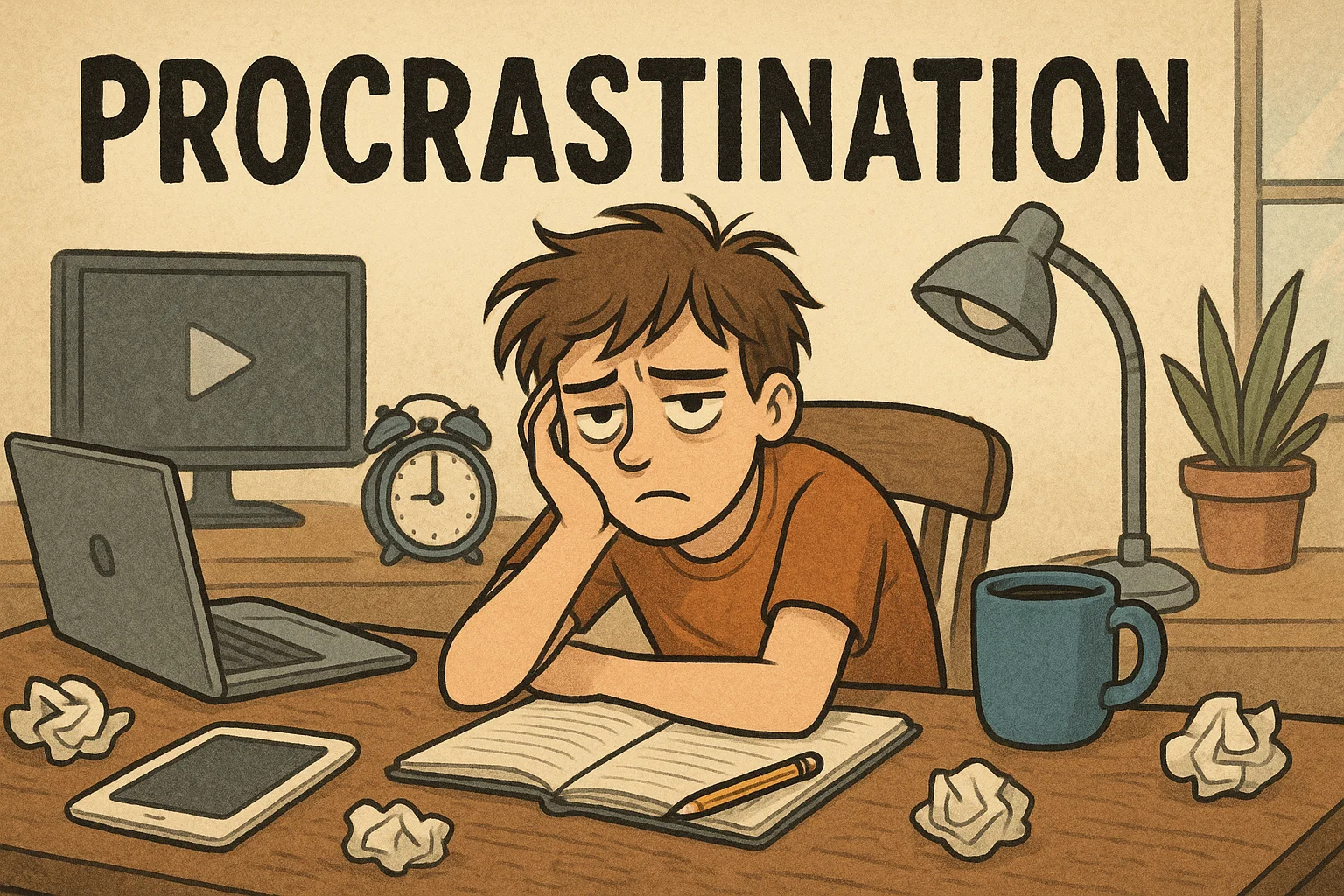
Have you ever promised yourself you'd start that important project "tomorrow"? Have you felt anxiety growing while postponing a task, knowing the deadline was rapidly approaching? Have you wondered why, even with the best intentions, you ended up aimlessly scrolling through social media when you should have been working on something truly important?
If you answered "yes" to any of these questions, welcome to the club. You're not alone – and this book was written with you in mind.
Procrastination is perhaps one of the most subtle and persistent adversaries we face in our quest for a productive and meaningful life. It's not just a time management problem, as many think, but a complex emotional and psychological challenge that affects people of all ages, professions, and achievement levels.
My own journey with procrastination began like many others: believing it was just a matter of "willpower" or "discipline." If I just tried harder, I thought, I could overcome this frustrating tendency to postpone what was important. However, the more I fought using only determination, the more procrastination seemed to strengthen.
It was only when I began studying the subject in depth – exploring scientific research, testing different methods, and most importantly, understanding the true psychological mechanisms behind this behavior – that I began to see real and lasting changes.
This book doesn't promise magical solutions or instant transformations. What it offers is something much more valuable: a practical path, grounded in both science and lived experience, to understand and overcome the procrastination patterns that have limited your potential.
The five techniques you'll find in the following pages were selected not only for their proven effectiveness, but also for their applicability to the real world. These are methods that work for real people, with busy lives and daily challenges – not just in ideal environments or for individuals with exceptional circumstances.
Unlike many approaches that treat procrastination as a moral or character problem, this book starts from the principle that postponing tasks is normal human behavior, often rooted in emotional protection mechanisms. It's not about judging, but about understanding and transforming.
I invite you to read these pages not just as a technical manual, but as a journey companion. Make notes in the margins, highlight what resonates with your experience, question what doesn't seem to apply to your reality. Above all, commit to actively experimenting with the techniques presented, remembering that true change rarely happens through mere knowledge acquisition, but through its consistent application.
If there's something I learned in my own journey, it's that overcoming procrastination doesn't mean becoming a productivity robot that works non-stop. On the contrary: it's about making space for what truly matters, eliminating the guilt and anxiety that accompany constant postponement. It is, ultimately, a journey toward freedom.
Shall we begin?
Go to Introduction