
Chapter 5: The Pareto Principle (80/20 Rule)
The Story of Vilfredo Pareto and His Discovery
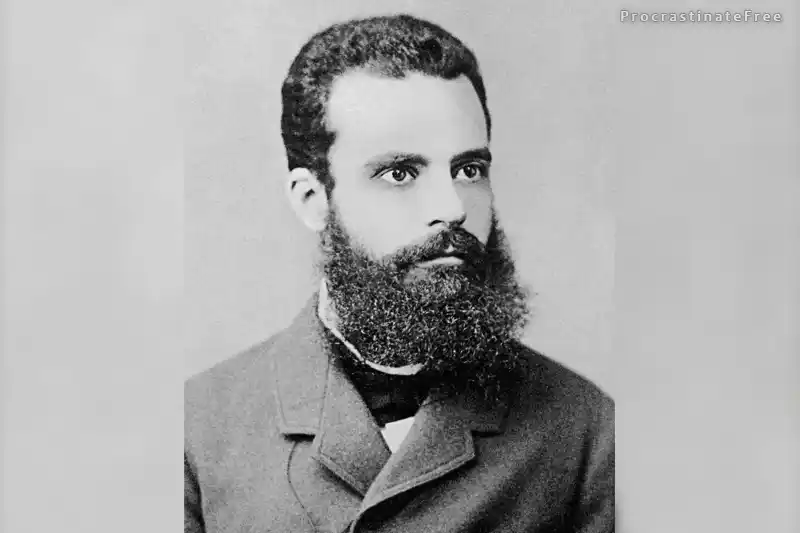
At the end of the 19th century, Italian economist Vilfredo Pareto made an apparently simple observation that would revolutionize our understanding of efficiency and productivity. While studying wealth distribution in Italy, Pareto noticed that approximately 80% of the land belonged to just 20% of the population.
What was most fascinating was that when he expanded his research to other countries and historical periods, he found surprisingly similar distribution patterns. This repetitive pattern led him to formulate what we know today as the Pareto Principle or the 80/20 Rule.
In its most basic form, the principle suggests that in many phenomena, approximately 80% of effects come from 20% of causes. The beauty of this observation lies in its almost universal applicability:
- 80% of a company's profits come from 20% of its customers
- 80% of complaints come from 20% of customers
- 80% of innovations arise from 20% of employees
- 80% of software usage is concentrated in 20% of features
- 80% of your productive time results from 20% of your activities
Joseph Juran, a pioneer in quality management, later popularized this discovery as the principle of "vital few and trivial many," highlighting how a relatively small number of factors usually dominate results in any system.
It's important to note that the exact numbers (80/20) are not a rigid mathematical law, but an approximation. In some cases, the disproportion may be even more extreme - 90/10 or even 99/1. The fundamental principle is the non-linear distribution between efforts and results.
For professionals struggling with procrastination, this discovery is revolutionary: it suggests that focusing on the critical 20% of activities can produce 80% of desired results, freeing up significant time and energy.
Identifying Your Crucial 20%
The true power of the Pareto Principle emerges when you precisely identify which activities make up your "crucial 20%" - those that generate disproportionately high results relative to the time invested. Follow these steps to discover them:
1. Conduct an 80/20 Analysis of Your Work
Start by analyzing your activities and results from recent months:
- List all your recurring tasks/projects: Be exhaustive, including meetings, emails, projects, calls, and administrative responsibilities.
- Evaluate the impact of each item: Assign an impact score (1-10) based on how significantly each activity contributes to your main objectives, whether career advancement, revenue generated, customer satisfaction, or other relevant KPIs.
- Estimate time invested in each item: Be honest about how much time you actually spend on each activity weekly or monthly.
- Calculate "return per hour": Divide impact by time invested to determine the efficiency of each activity.
- Order the list: Organize activities from highest to lowest return per hour.
Example for a digital marketing consultant:
| Activity | Impact (1-10) | Weekly Time (h) | Return/Hour | Category |
|---|---|---|---|---|
| Developing strategies for main clients | 9 | 5 | 1.8 | Top 20% |
| Analyzing campaign data | 8 | 5 | 1.6 | Top 20% |
| Internal team alignment meetings | 4 | 8 | 0.5 | Other 80% |
| Answering routine emails | 3 | 10 | 0.3 | Other 80% |
| Creating administrative reports | 2 | 7 | 0.29 | Other 80% |
2. Identify Revealing Patterns
After completing this analysis, observe patterns in your "crucial 20%":
- Common characteristics: Do your high-impact activities tend to involve creativity, strategic thinking, key relationships, or specific technical expertise?
- Optimized contexts: In what environments, schedules, or mental states do you perform your most impactful activities?
- Intrinsic motivations: Is there a correlation between your highest-return activities and your natural interest or passion?
Example for a software developer: Ana, a senior developer, discovered that her greatest impact came from (1) solving complex architectural problems, (2) mentoring junior developers in advanced techniques, and (3) reviewing critical code. All these activities occurred when she could work in uninterrupted blocks of at least 90 minutes and involved her passion for teaching and solving technical puzzles.
3. Identify the "Negative 20%"
The Pareto Principle also applies inversely:
- Which 20% of activities cause 80% of your procrastination?
- Which 20% of commitments generate 80% of your stress?
- Which 20% of meetings consume 80% of your unproductive time?
Identifying these "energy drains" is as valuable as finding your productivity boosters.
Example for a project manager: Carlos realized that 80% of his stress came from just 20% of stakeholders - specifically two executives who constantly changed requirements without following the formal process. By identifying this pattern, he developed a special communication protocol for these specific interactions.
Implementing the 80/20 Rule in Different Industries
The beauty of the Pareto Principle lies in its versatility. Here's how professionals from different areas can implement it to overcome procrastination and maximize results:
For Sales Professionals
80/20 Analysis:
- 80% of sales probably come from 20% of clients
- 80% of qualified leads probably come from 20% of sources
Practical Implementation:
- Segment your client base using RFM analysis (Recency, Frequency, Monetary Value)
- Develop a VIP program for your top 20% clients
- Create qualification scripts to quickly identify prospects with higher potential
- Optimize your visit route to maximize time with high-value clients
Transformation example: A pharmaceutical representative discovered that 85% of her sales came from just 15% of the doctors she visited. By restructuring her schedule to dedicate 60% of her time to these key prescribers (instead of the previous 25%), she increased her sales by 40% while reducing her time on the road.
For Technology Professionals
80/20 Analysis:
- 80% of critical bugs occur in 20% of the code
- 80% of usage is concentrated in 20% of functionalities
Practical Implementation:
- Implement code coverage analysis to identify critical areas
- Prioritize backlog based on actual usage, not just perceived importance
- Proactively refactor the 20% of code that generates the most problems
- Automate tests for critical components with a history of failures
Transformation example: A development team discovered that 90% of user complaints came from problems in just three system modules. By dedicating an entire sprint to rebuilding these components (temporarily ignoring less critical improvements), they reduced support tickets by 70% and freed up time for innovation.
For Educators
80/20 Analysis:
- 80% of student progress comes from mastering 20% of fundamental concepts
- 80% of disciplinary problems come from 20% of classroom situations
Practical Implementation:
- Identify fundamental concepts that unlock broader understanding
- Create multiple practice opportunities for these key concepts
- Develop diagnostic assessments focused on the most crucial 20%
- Establish proactive routines for known problematic situations
Transformation example: A mathematics teacher identified that understanding fractions was the fundamental concept (among the crucial 20%) that predicted future success in algebra. By tripling the time dedicated to this topic (using games, real-world examples, and spaced practice), he significantly improved algebra results the following year.
For Healthcare Professionals
80/20 Analysis:
- 80% of positive outcomes come from 20% of interventions
- 80% of readmissions come from 20% of patients
Practical Implementation:
- Identify high-impact interventions for common conditions
- Develop specific protocols for high-risk patients
- Optimize workflows to maximize time in high-value clinical activities
- Automate routine documentation that consumes disproportionate time
Transformation example: A primary care clinic discovered that 75% of preventable emergencies came from 18% of patients with poorly controlled chronic conditions. By implementing a proactive follow-up program only for this group (brief weekly calls and remote monitoring), they reduced emergency room visits by 60% while improving patient satisfaction.
Combining Pareto with Other Techniques
The Pareto Principle doesn't exist in isolation - its power is multiplied when strategically combined with other productivity techniques:
Pareto + Eisenhower Matrix: The Precision Prioritization Method
The combination of these two approaches creates a powerful system for overcoming procrastination:
- First step: Pareto analysis to identify your high-impact activities (the crucial 20%)
- Second step: Eisenhower classification of these items into four quadrants
- Main focus: Activities that are simultaneously part of your crucial 20% AND fall into the "Important but not Urgent" quadrant
Benefit: This combination eliminates the trap of prioritizing low-impact tasks simply because they seem urgent.
Practical example: A marketing manager identified that developing content strategies was among his crucial 20% (high impact) and belonged to the "Important but not Urgent" quadrant. By blocking the first two hours of each morning exclusively for this work, he transformed his team's effectiveness.
Pareto + Pomodoro Technique: The High-Performance Focus System
This combination enhances your concentration on the crucial 20%:
- Identify your high-impact activity for the day (from the crucial 20%)
- Dedicate your first 2-3 Pomodoro cycles exclusively to this task
- Keep a log of Pomodoros by task category to verify if your time is aligned with the ideal 80/20 distribution
Benefit: Ensures protected focus time for your most impactful 20% before the day is consumed by minor urgencies.
Practical example: A financial consultant began dedicating his first three pomodoros (about 90 minutes) daily to analyzing opportunities for main clients (his crucial 20%) before checking emails or taking calls. This simple change generated three new major accounts in two months.
Pareto + Time Blocking: The Strategic Allocation Framework
This powerful combination ensures that your calendar reflects your real priorities:
- Calculate how much time your crucial 20% truly deserve (theoretically, 80% of your productive time)
- Block this time in your calendar first - before minor commitments
- Group tasks from the "other 80%" into efficient blocks for batch processing
- Review weekly to ensure deviations aren't occurring
Benefit: Transforms your schedule from a list of commitments to a strategic tool that prioritizes impact over activity.
Practical example: An architect identified that working on initial design concepts and meetings with main clients were her crucial 20%. She redesigned her calendar, dedicating entire mornings (when her creativity was at its peak) exclusively to these activities, grouping administrative meetings and less critical reviews in the afternoons.
Pareto + Energy Analysis: The Biological Alignment System
This approach aligns your biological rhythms with your crucial activities:
- Monitor your energy levels during a typical week, scoring each hour of the day
- Identify your peak energy periods (usually 2-3 hours per day)
- Align your crucial 20% exclusively with these peak periods
- Reserve low-impact activities for reduced energy periods
Benefit: Multiplies your effectiveness by leveraging the synergy between your peak cognitive states and your most impactful tasks.
Practical example: A copywriter discovered that his creative peak occurred between 8 AM and 10:30 AM. By rigidly protecting this period for writing (his crucial 20%) and moving emails, billing, and research to the afternoon (his lower energy period), he doubled his quality content production.
The Pareto Principle offers us a powerful lens to analyze our distribution of efforts and results. By identifying and consciously prioritizing the 20% of activities that generate 80% of results, we can not only overcome procrastination but fundamentally transform our approach to work and life.
The true wisdom of the 80/20 principle lies not just in working on the crucial 20%, but also in having the courage to minimize, delegate, or eliminate low-impact activities that consume disproportionate time without generating significant returns. When mastered, this approach not only increases productivity but also reduces stress and enhances professional satisfaction.